
Breath of the Wild and Tears of the Kingdom are both glorious games. When it comes right down to it, I don’t know if I’d be able to pick a favourite. Tears improved on a lot of things from Breath, but there are some things that I think Breath still did better.
So, I decided to compile a list: ten things I think Tears improved upon, and ten things I miss from Breath. Since Tears is turning a year old this week, there’s no better time to embark on a discussion of this topic in celebration!
I’ve decided to leave out the really obvious things that Tears added: the Sky Islands and the Depths are an obvious addition that have no real counterpart in Breath to be compared to. I wanted to zero in on less talked-about improvements in this blog post, but rest assured, I love the Sky and the Depths too. On this same point, I’ve also excluded Ultrahand, which is (like the expanded map) a highly featured and prominent addition to the sequel.
Well, and, I may have lied just a little bit. Read on to the end of the article to find a secret, eleventh improvement Tears made that you, dear reader, may not even have noticed.
One last thing before we dive into it: although the game is a year old, here’s your obligatory spoiler warning for Tears of the Kingdom, as some of the things I discuss involve later-game revelations and this article features several screenshots from my time playing.
- Missed: Unlimited Bombs.

The monk Shai Yota is very proud of your accomplishments, Link.
Bombs used to cost nothing. After years of limited-capacity bomb bags, Link finally managed to discover the joy of Sheikah bombs: they were, aside from a quick cooldown, infinite. When you take into consideration that they were remote and could be detonated at any time you liked, they really do have a massive advantage on every other bomb appearance in the series, those cumbersome Zonai time-detonated bombs included. Sure, they only did 24 hit points of damage after Purah’s upgrade, but they were absolutely, unequivocally free, which has to count for something.
They were also critical in multiple shrine puzzles (Sho Dantu’s Two Bombs and Ya Naga’s Shatter the Heavens both come to mind), leaving the total abilities to base shrine puzzles off of at four, one higher than Tears—as Fuse can’t really be used in such a capacity. Bombs themselves still technically can be used in Shrines in Tears, but mostly just as a way to cheese target puzzles.
As a side note: did anyone else enjoy taking out camps by slowly rolling bombs into them? It was ridiculously time consuming and an exercise in patience, especially when you were standing on top of a skull camp hoping that each bomb was going to roll into its eye and blow up; but it was also weirdly satisfying and an invaluable strategy in the early game.
Time Bombs just aren’t the same. And sure, Bomb Flowers have much more power than both Remote Bombs and Time Bombs, but they’re an expendable resource that can and will run out.
1. Improved: Ascend

Link poking his head out of a Zonai sphere in a Shrine, utilizing Ascend.
Ever since the first teaser where we saw Link’s top half sticking out through a slab of Zonai-wrought stone, I have been excited for the idea of Ascend; and once I finally had it in my hands in Gutanbac Shrine I was not, under any circumstances, disappointed.
I have quite possibly never abused a video game ability more than Ascend. I’ve abused it so much that I’ve found myself on multiple occasions watching shows thinking that a character could simply use ascend in a particular situation, only to realize that they were in fact in an entirely different world that did not contain Rauru’s right arm. The more you use it, the more you can think of other ways to use it. It’s incredibly useful and welcomes all sorts of creative thinking. It’s also brilliant for getting Link out of a jam.
Seeing the upper half of Link’s body sticking out through a solid object while he glances around at his surroundings is also very, very cute.
2. Missed: Kass

Kass drops by Zora’s Domain to play Link a cheery song.
His theme song popped into your head when you read his name just now, didn’t it? I know it did for me.
Kass was a such a sweet and fun addition to Breath. He was friendly, offered engaging puzzles, and brought some music into the desolate, post-apocalyptic Hyrule. Whether he was asking you to strip naked on a blood moon or simply requesting that you find yourself a stag to ride around on, Kass could always be counted on for a good time.
I think the absence of Kass in Tears is one that is felt keenly by many fans, including myself. His family, including his clutch of five Rito children, are still around. Why isn’t Kass? Is he on tour in Termina with the Indigo-gos? While that may be my running theory, Kass touring with a Zora band is in no way canon. In the entire game, Kass’ name is never said, and he’s only mentioned once by Penn on Washa’s Bluff in a comment that the ‘Rito bard’ used to roost there. It’s such a strange thing, considering his prominent role in Breath. I love Penn’s addition, but Kass brought such life to otherwise desolate areas, his accordion reaching Link’s ears as an indication that a sidequest awaited.
2. Improved: Penn and the Lucky Clover Gazette

Penn takes a vacation to Washa’s Bluff, paying tribute to the famous Rito bard that came before.
Penn’s quests are a great time. They make every stable (minus the East Akkala Stable for some bizarre reason) feel unique and special, give the world a more lived-in feel, and are just fun in general. Sometimes Penn and Link uncover a nefarious Yiga plot, but others it’s just a friendly NPC practicing her singing in a well. You’re never quite sure how they might turn out, and that’s part of what makes them fun. And while Penn is in no way a replacement for Kass, he’s a fun character that stands alone in his own right who deserved to coexist with him. The Lucky Clover Gazette is a great addition to a rebuilding Hyrule, and Penn is a fun and cheery companion. While it’s a fairly new kind of quest for the series, I hope to see more like them in the future.
This series of side adventures also features a fantastic reward. I have more to say about it later, though, so I won’t go into detail here.
3. Missed: Guardians

As much as I think the Gloom Hands have upped the terror factor of a surprise encounter while strolling Hyrule Field, I have to admit that I miss actually fighting Guardian Stalkers. Challenging even at the end of the game, they were great fun to fight, chasing them down so you could slash their legs off with the glowing Master Sword, a process that would leave Guardian parts scattered halfway across Hyrule Field. They were tough, but they were fun, and learning how to properly defeat them after your first couple of scares proved very rewarding. While I harbour significantly more dislike for their flying counterparts, the Skywatchers (hammered home after a good dozen Game Over screens at the Akkala Citadel), the good ol’ Stalkers were a great enemy that I’m saddened to see go, even if I understand why they no longer have the run of Hyrule Field. It wouldn’t do to have a host of angry laser-emitting pottery placing the newly built Lookout Landing under siege, now would it?
I suppose that means Guardians now reside in the roster of unique, game-specific enemies like the Shadow Beasts from Twilight Princess. That being said, I would have loved it if they kept just one, singular Guardian in Tears, lurking somewhere in the Depths waiting for an innocent Link to stumble upon it.
Don’t get me wrong, it would have scared me off the couch and probably led to a controller-shaped hole in the wall, but I would have loved it.
3. Improved: More Diverse Enemies (and Less Random Enemy Spawns)

The glory and menace of a very angry Frost Gleeok.
One thing that seems to have been smoothed over in Tears, thankfully, is the constant presence of those particularly insufferable enemies that love randomly showing up at the worst possible times. Fighting a Guardian? Here, have some Stalmoblins to take care of as well. Trying to carry an orb to finish a shrine quest? How about an ambush courtesy of an angry Yiga Blademaster.
Random enemy spawns were more or less the bane of Link’s existence in Breath, where you couldn’t travel at night in most spots without encountering at least one or two packs of Stalfos. As someone who’s constantly hoping that the next Zelda game will be the first in the series to not feature these enemies, I think you can imagine how irksome I found this. However, with Stalfos now having been largely relegated to the Depths, their spawn rate in the overworld is significantly down. So, too, are the random Yiga spawn rates, with most encounters being through picking up random bananas on the street or investigating mysteriously dead trees than by them simply spawning out of thin air, which makes not only exploration but also combat more fun—because you’re not forced into it as often, you’re more likely to initiate the fight.
Another point in this same vein, one that I didn’t bother separating because it’s closely related to my first point: Tears has a notably wider variety of enemies compared to its predecessor. Not only are there three new overworld minibosses—the menacing Gleeoks, the dynamic Flux Constructs, and the irksome Frox—there are also new additions like the Horriblin and the Gibdo to Hyrule’s monster menagerie. It makes for a nice change, breaking things up. It’s brought back some old classics from previous games like Like Likes, and new additions like the Aerocuda (who I genuinely wish had more than two hit points, because their design is excellent).
Shame the silver enemies don’t drop gems anymore, though. That was nice.
4. The Champions.

Revali, as saucy and abrasive as ever.
I love the Champions. While Revali and Urbosa may be my joint favourites, Mipha and Daruk are also wonderful characters in their own right. All of their fates are truly tragic and sad, and most of the time I like imagining a fix-it alternate universe where they all survived and lived long, rewarding lives, much like Queen Sonia did after the flashback events in Tears. That is exactly how canon played out and you can’t convince me otherwise.
I mean absolutely no hate against the Sages when I say this—I love them too, especially my sweet boy Yunobo. But, in Breath we happily got both the Sages and the Champions; we get precious few mentions of any Champion aside from Mipha in Tears, and Urbosa has tragically been entirely unmemorialized by the Gerudo tribe. This in particular seems rather odd when you consider how proud the Gerudo people are. No fountain or statue, or literally anything to commemorate one of their proudest chiefs? It’s a little sad, actually. Even the Rito spared a plank of wood for their salty Champion. Why hasn’t Urbosa gotten anything to commemorate her memory, now that the Calamity has been vanquished?
4. Improved: Caves and Wells
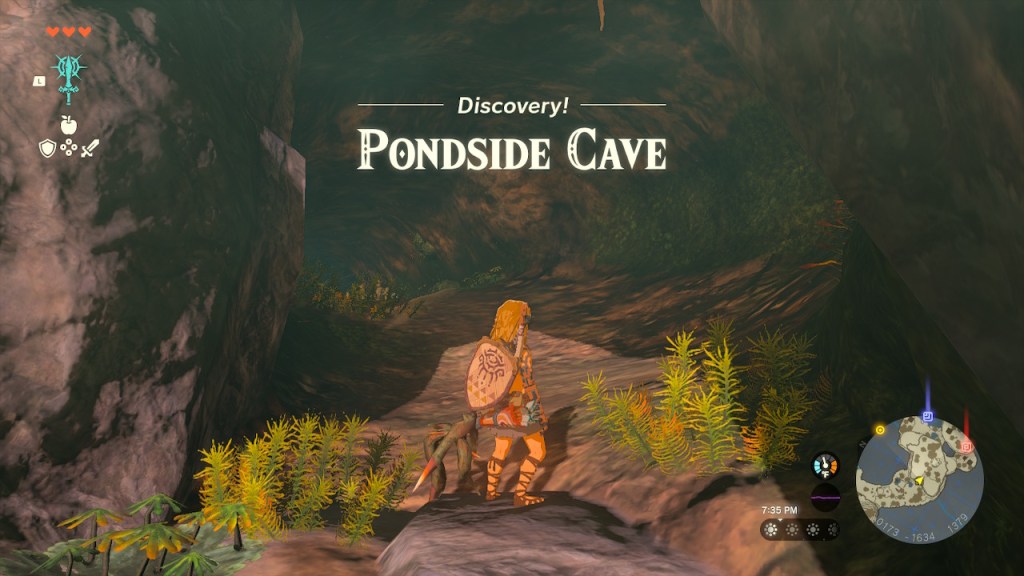
The very first cave I found, on the Great Sky Island.
Putting something underneath all those random, soil-filled wells that dotted Hyrule in Breath was an absolutely brilliant decision. Yes, I may have slaved away for months on the Where are the Wells? quest, but that doesn’t mean I don’t harbour a fondness for them nonetheless. It’s a great way to expand the world in 58 little pockets, and was a brilliant scavenger hunt. Regardless of how much I complain about the whole thing, I loved it.
But what was an even bigger expansion than the wells? Caves! Dozens of them, scattered across Hyrule just waiting for Link to find, with the Bubbul Gems serving as a perfect incentive to explore each and every one (not that I wouldn’t have made an effort to even if there wasn’t). While I can’t say I’m particularly fond of the Horriblins that typically reside within, I love the additions of cave-exclusive flora and fauna like the brightcaps and glowing cave fish.
I remember when I was playing The Witcher 3, thinking that the extensive cave systems, many of which were heavily involved with quests, weren’t something Breath had really done much of, aside from a couple of small caves that mostly just existed to house shrines. You can imagine my pleasure when I stumbled into my first cave on the Great Sky Island on release day and realized that my wish had been granted. Exploring caves—or SpeLinking as I’m wont to call it—is just so much fun.
5. Missed: Cryonis

Link using Cryonis to excellent effect to dispatch a Guardian Scout.
I didn’t expect it, but of all the Sheikah runes, Cryonis has been the one I’ve found myself missing the most often throughout my Tears playthrough. To be fair, it’s the only one that doesn’t really have an equivalent in the new game. Sure, you can make ice blocks in water using ice fruit, but it’s far from the old beauty of Cryonis—they melt fairly quickly, for one; they also move around a lot more and aren’t nearly as tall.
The absence of Cryonis is also apparent in shrines—as I mentioned earlier, Fuse isn’t really much good in the ‘puzzle dungeon’ department. Cryonis was often useful when thinking quite far outside the box, such things as lifting up gates or Guardians if they were in standing water, or freezing waterfalls. I wish we still had Cryonis particularly for this last function. Imagine putting a Cryonis block sideways on a waterfall and just Ascending up through? It would put the Hover Stone technique to shame.
5. Improved: Slip-Resistance (and Slip-Proof)

A Hylian traveler remarks upon Link’s useful froggy getup.
This singular buff is such a massive deal it deserves its own slot on this list. The ‘slippery when wet’ mechanic in Breath, for all its realism, is a notorious source of frustration for anyone who’s played the game, particularly during the Divine Beast Vah Ruta questline. Even three full wheels of stamina did little to get Link up a wet rock face. While the lower levels of Slip Resistance don’t fix the problem entirely, they do make a notable improvement to this debacle. And, after you’ve completed your stint as a reporter for the Lucky Clover Gazette, you can obtain the complete set of Froggy Armour, which when upgraded twice can eliminate the problem of Link sliding down slippery cliffs entirely. What a relief! It also makes a wonderfully suitable reward for such a large, sprawling set of quests. Finally being able to conquer Hyrule’s rainstorms? Now that’s something I can get behind.
6. Missed: Ancient Horse Gear (and Horses Were Just More Useful in General)
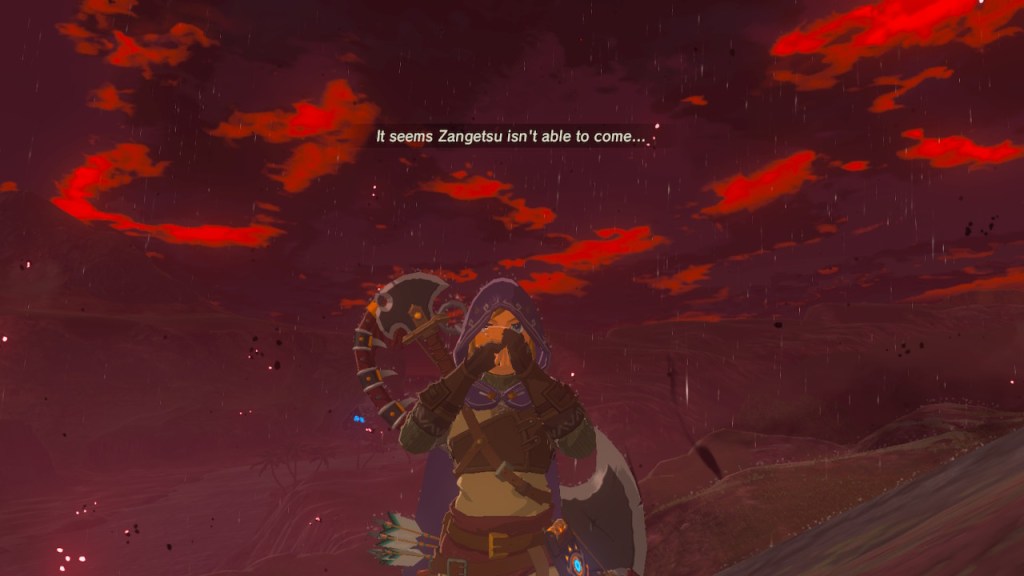
The real reason Zangetsu isn’t able to come is because Link’s beloved Sheikah saddle is lost. (Yes, I am aware this screenshot is from Breath of the Wild, when I still had it.)
I know part of this is technically DLC, but I miss it enough that I feel it warrants being mentioned, especially considering that it’s one of the only DLC items that somehow didn’t make its way into Tears. I guess you could just build a Zonai car or something like that than summon your horse, but it makes me a little bit sad. Horses feel less critical to getting around Hyrule with the advent of Wheels both big and small, and while I don’t mind Ultrahand, on the whole I prefer horses. This conspicuous absence just makes it apparent that Link’s equine friends are not meant to be as useful as they were in Breath, which is a shame because you can now register twice as many. Perhaps it sounds lazy on my part, but the complete removal of the Ancient Horse Gear makes me a lot less likely to make use of horses and far more likely to just walk on foot.
6. Improved: More Horse Slots (and Pony Points!)
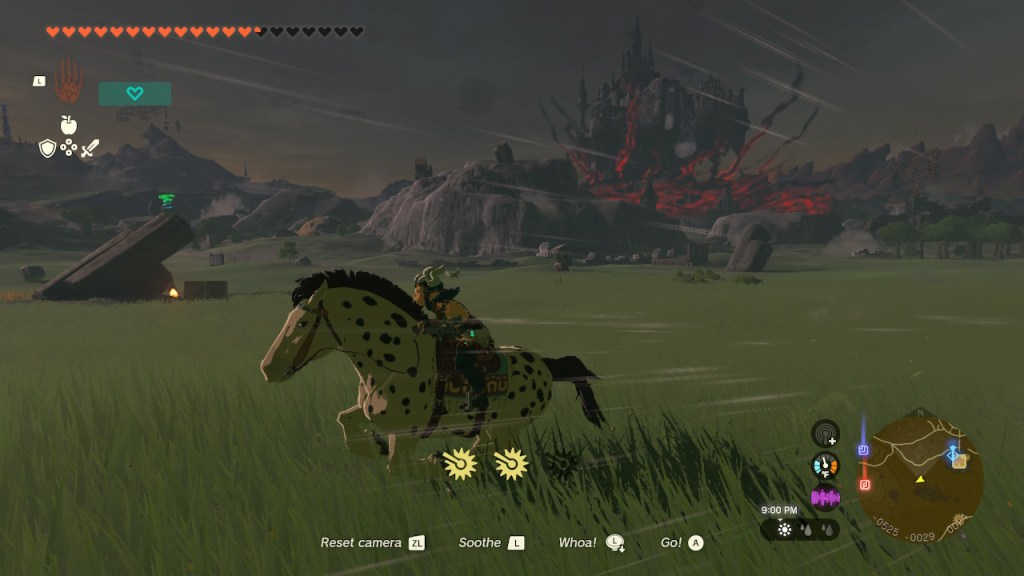
Link is enjoying a nice ride through Hyrule Field on his faithful steed…Ghirahim.
I was very chuffed on release day to discover all my beloved horses from Breath had made it to Tears! Particularly my favourite steed Ibara. Just as exciting was the introduction of Pony Points, which share their name with the mail-order program from the third generation of My Little Pony (a fact I’m sure most other Tears players don’t particularly care about).
Pony Points, importantly, allow you to obtain the mythical Knight’s saddle and bridle, which were damn near unobtainable in Breath due to that nasty, nasty horseback archery camp that they’ve thankfully removed, probably because homing arrows would make it too easy to cheese. I just find the idea of Pony Points really fun and sweet, a better realized version of Beedle’s Customer Loyalty program in Wind Waker. And hey, at least the stable managers are actually giving you the rewards they promise. It’s a fun addition to the world, and gives you extra incentive to stay overnight at a stable.
7. Missed: Lynel Weapons (and Better Weapons In General)
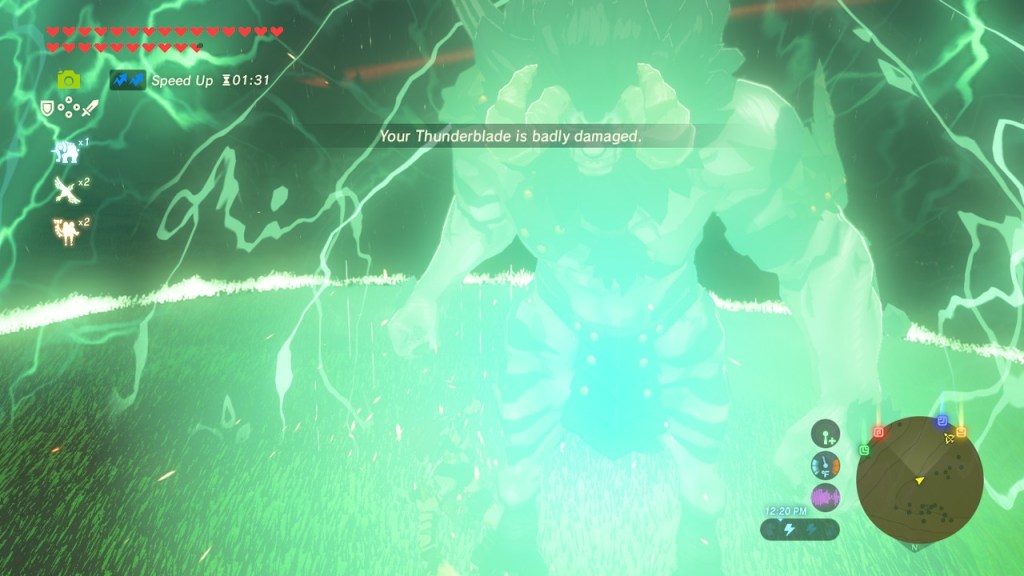
A Thunderblade–you don’t see those around anymore, do you?
I miss the days when you’d kill a Lynel after getting thoroughly trounced, excitedly looking through the loot it dropped to see what kind of overpowered melee weapon it left for you. Of course, it would never pack a Lynel-level punch when you used it, but it was special, exciting, and a great incentive to fight them. While their bows still maintain this fabulous quality for destruction (and so do their shields, which is largely irrelevant because I didn’t use them in Breath and still don’t use them in Tears), the only weapons Lynels use in Tears are shoddy, decayed claymores. I’ve never particularly liked Royal Claymores, so to find my beloved Savage Lynel spears, swords and crushers replaced by them is more than a little disheartening.
Of course, weapons in general aren’t as good as they used to be. Several cool and exciting weapons are missing entirely from Tears’ roster—the drillshaft, the demon carver, and the edge of duality among them.
The one thing that Tears does do better than Breath as far as weapons are concerned, however, is the Eightfold Longblade. Sure, it only does a quarter of its former damage, making it somewhat more useless, but they’re far more plentiful than the one, once every two blood moons spawn on Brynna Plain that I had to endure in Breath. It also means that I’m far more likely to use them now, because all I need to do to obtain one is poke a sleeping Yiga Blademaster.
7. Improved: New Ingredients, New Recipes, and Recipe Cards

Link simply can’t wait to dive into that delicious looking cheesecake.
I’m lumping these three together because they really all amount to the same thing: the cooking in Tears has vastly improved on that of its predecessor. Not only can you view recipes you’ve previously made in your inventory and automatically select them again, what you can cook has greatly increased as well. With the addition of ingredients like Stambulbs, Hateno Cheese and Hylian Tomatoes, all of which being things I directly stated on multiple occasions I’d like to see in Tears, I was ecstatic. (You should have seen me the first time I picked a Hylian tomato—I was floored with excitement, and no I’m not exaggerating.) I have a peculiar fondness for illustrations of food, so naturally I found these updates rather exciting—I was almost drooling as much as Link! Specific weirdness aside, though, I’m sure I can’t have been the only one thrilled to discover that Link can now make his own pizza, complete with tomatoes, peppers and onions. There’s also the glorious melty cheesy bread he makes…yum.
The only thing that could possibly make this better is if they introduce cocoa and potatoes next game.
8. Missed: Harder and More Varied Shrine Quests
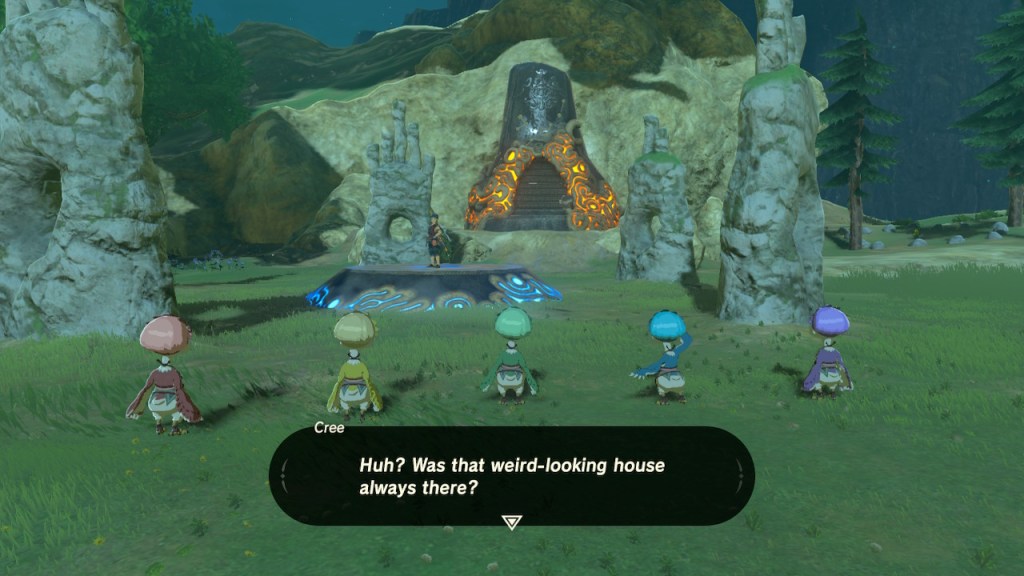
A flock of young Rito stare in wonder at the newly emerged Voo Lota Shrine.
There are a lot of shrine quests in Tears, but unfortunately most of them are variations on a theme of ‘get this crystal to the shrine pedestal.’ While fun, they pale in comparison to the wide variety of challenges required to unlock some of the Sheikah shrines in Breath. There are only a handful of unique shrine quests in Tears, but every single one in Breath is a distinct entity. Some are especially memorable, particularly the infamous ‘Stranded on Eventide Island.’ However, even aside from that outlier, far more of the quests in Breath were unique experiences, from the Goron Blood-Brothers’ Trial of Endurance to Link’s icehouse run. I miss some of these exciting quests.
8. Improved: Proving Grounds Shrines

Link may have gotten more than he bargained for, walking into this Shrine…
The Tests of Strength were fine, but they were a little bit repetitive. The Proving Grounds shrines, on the other hand, are anything but. They require some creativity and reward strategy, making clearing them feel far more rewarding than simply killing a construct in one-on-one combat. They’re a cross between Eventide Island and the old Tests of Strength, and they’re quite a lot of fun (even Sifumim Shrine, which managed to thoroughly pulverize me). Each one requires a slightly different strategy, but there are still a vast number of options when it comes to wiping out the constructs that dwell within. Some are elaborate enough that they feature laser-activated traps you can lure the constructs into, or homing carts to create your own automated allies, or even a flowing river around the outside of the shrine you have to navigate to execute your opponents from afar. The only shame is, you can’t really replay them like you could the original Tests.
9. Missed: Ambience
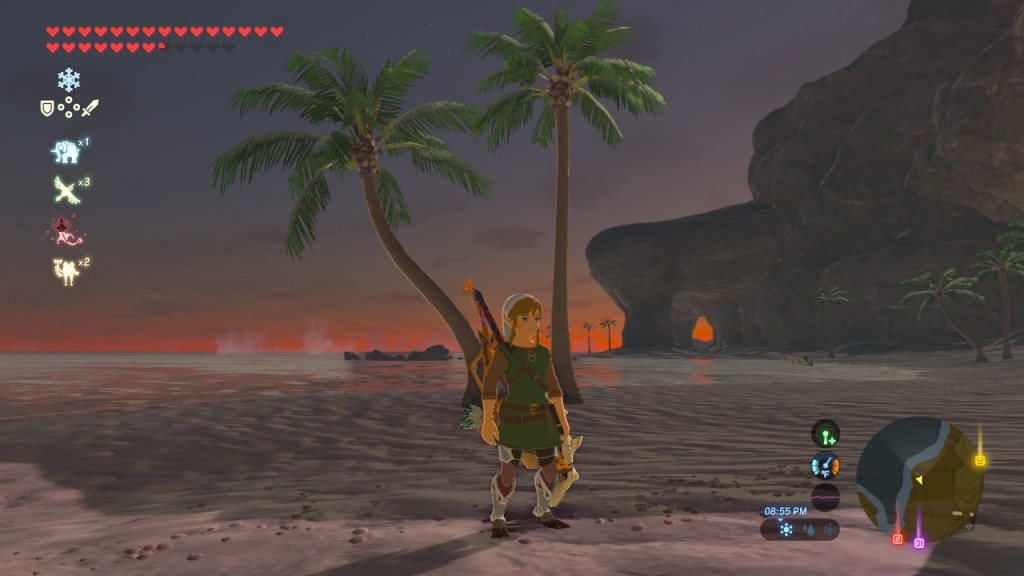
Link enjoys a beautiful sunset on the Faron coastline.
I miss those little hoot owls that populated Hyrule Field at nighttime. Just hearing them makes me instantly nostalgic for Breath. Unfortunately, Hyrule’s owls seemingly no longer sound like that.
Another nighttime staple around Hyrule that has changed is the song of the whip-poor-wills; while it can still be heard occasionally in Tears, that’s sadly not nearly as much or as often as it used to be and when it does appear it is noticeably quieter.
While the new field themes introduced in Tears are lovely, I have to admit I might slightly prefer the old ones. There was something magical about the ethereal phrases of notes that flitted through the air on your adventure that I miss, and hearing them now makes me instantly nostalgic. (Can one be nostalgic for a game that’s only seven years old?) Part of what made them special is that they were played exclusively on the piano, which gave them simultaneously impressions of both simplicity and intricacy.
Perhaps I’m also biased here as I have always enjoyed sitting down at the piano to play these odd little phrases, which brought with them a thrill of joy as they sounded almost exactly like the game was on in the background. I can’t do that with the Tears field theme, because while it’s still largely piano, there is a bit of string music backing it, making it feel lusher and more fleshed out. And I’d be lying if I said that didn’t make me a tiny bit sad.
Before I move on, I want to draw attention to one particular phrase of the nighttime field theme that is no longer: an extremely high note on the piano (an F, if you want to get pedantic), played over in over in rapid succession. If you know what I mean, you know how deliciously creepy and unnerving it is. I miss that little phrase; its simplicity is what makes it so effective.
9. Improved: More Distinct Dungeons
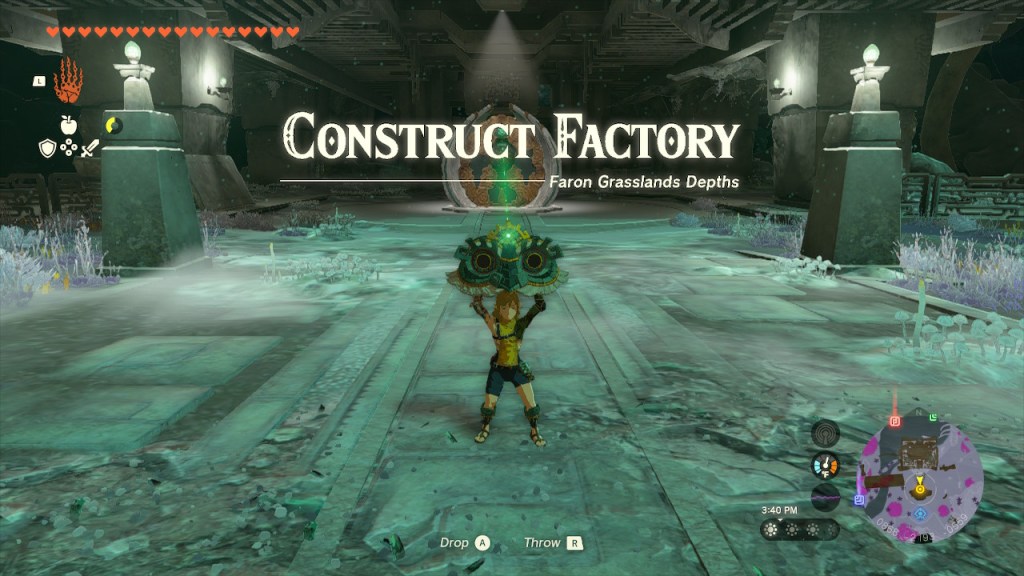
Welcome to the Construct Factory.
A common complaint about Breath was that all its dungeons were short and rather indistinct. (There were even some people saying they weren’t dungeons at all, but I think that’s a bit harsh.) However, the dungeons in Tears certainly can no longer be called repetitive with their stark contrast in aesthetic. Between Gorondia, a mine cart maze inside a volcano, to the Stormwind Ark nestled in a bank of furious snowclouds, the dungeons are distinct and fun. Sure, they still use the ‘five terminal’ formula established in Breath, but their aesthetics and mechanics are entirely different and distinct from one another, and by acquiring the Sages’ help before entering the dungeon (with the exception of Mineru) as opposed to after it, they function like a dungeon item in the games of old and allow the puzzles to be more specialized. Perhaps some aspects of the dungeons can be cheesed using Zonai devices and Ultrahand, but I don’t know why anyone would possibly want to when it’s far more rewarding to solve them without. I know that I’m not the sort to whip out Ultrahand for anything by any means, but if you’re bypassing the mine carts in the Fire Temple with one of those annoying and weird hoverbikes, then you’re not fully enjoying the Fire Temple the way you were supposed to. Because the intended way of playing through the tangled maze of Gorondia? Absolutely brilliant.
There’s also the Construct Factory, an unusual addition that seems to be the first of a new kind of dungeon that breaks the traditional mould even further. I have to admit, I’m curious if we’ll see something like this again in future installments!
Another aspect of the dungeons that is far more distinct than in Breath is the bosses. While you could really only distinguish between the Blight Ganons by their weapons and in some cases their size, each of the five main dungeon bosses in Tears are entirely separate entities from each other. I’m rather partial to Colgera, myself.
10. Missed: Upgrades Were Easier (and Drop Rates Were Higher)
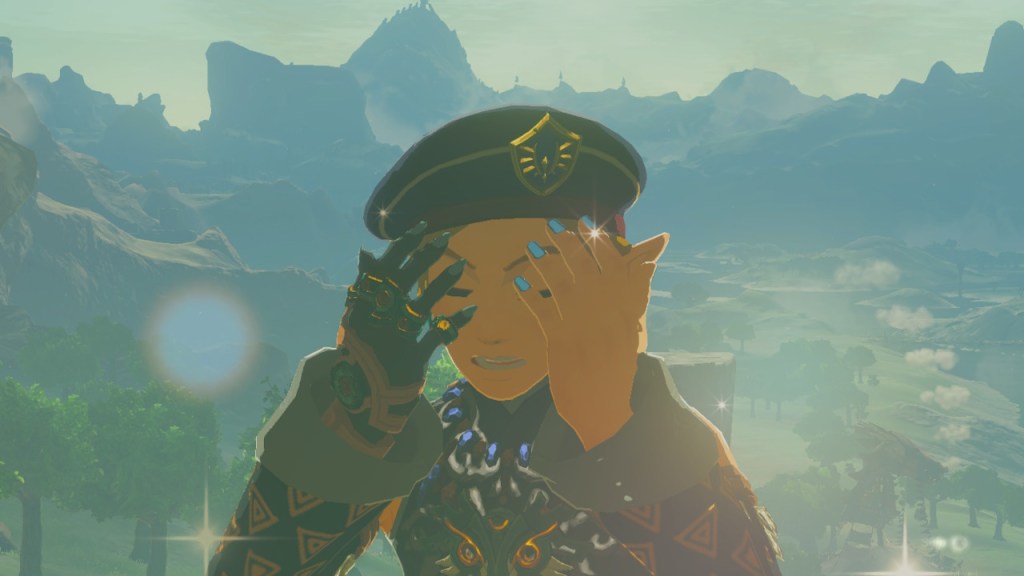
Link is horrified at the long list of items the Great Fairy told him he needs to get to upgrade his armour.
While there are arguments to be made both for and against the introduction of a rupee cost at the Great Fairy Fountain, that’s by no means the only thing that’s made upgrading your armour more difficult.
The more troublesome issue with armour upgrades is the fact that the monster parts required for the upgrades have had a significantly reduced drop rate compared to that of Breath. The drop rate was never 100%, nor should it have been, but at least getting 10 elemental Lizalfos tails in Breath wasn’t a Heruculean labour in and of itself. Granted, the only reasons one would want ten Lizalfos tails in Breath would either be to upgrade armour or to sell them (as they were rather useless outside of this), but it was less of a task by a long shot. Now, I could toil for one in-game daytime killing every last Lizal in the Gerudo Canyon, and there’s still a fairly good chance I wouldn’t have acquired all ten I needed. The upgrades are such a steep demand that I almost never fuse certain things to weapons because I simply never have any to spare. There isn’t even the reliable Dueling Peaks trick to acquire star fragments to upgrade all that nostalgic armour that was such a helpful thing in Breath. Dragons have also become increasingly unpredictable to catch with their new patterns, leading to a ‘drop everything and skydive’ approach becoming necessary.
I don’t recall racking up nearly as ridiculous a list of obscure, difficult-to-find items for the picky fairies in Breath.
The introduction of eight different kinds of construct horns has only exacerbated this issue.
10. Improved: New, Fun Armour Sets
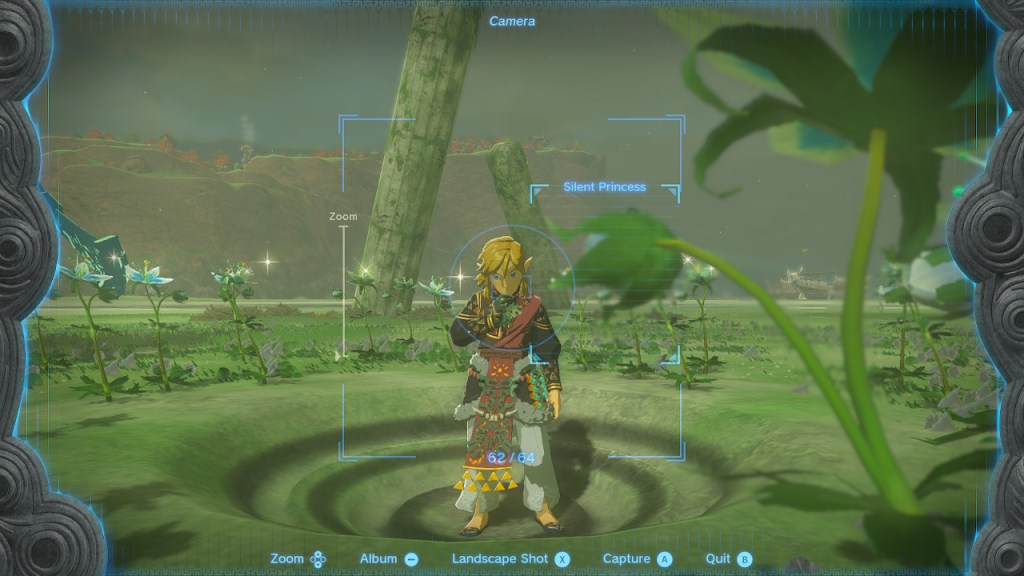
Link models the Ember Shirt and Frostbite Trousers on Rist Peninsula.
This is a major point of improvement. Not only is a vast quantity of previously amiibo and dlc exclusive clothing now included within the main game, there are also several new, never-before-seen outfits featured. This includes the glorious trio of dragon outfits, regarding which I could feasibly spill a torrent of neverending praise. Who cares that their buffs are highly situational—they look fantastic wherever you are, and when you’re in the correct weather conditions, they light up. This is ridiculously cool and anyone who says otherwise has clearly never experienced the pure joy of seeing Link walk around with a glowing green dragon horn strapped to his forehead.
Along with the new armour sets, we got the exciting prospect of Misko’s hidden treasure in caves across Hyrule. These quests are always fun, and there’s an undeniable sense of accomplishment when you unearth an exciting new piece of clothing, even if it’s one you’ve already obtained from your amiibos. (Hey, you can always sell it, right?)
With all this new armour, and only a few pieces having actually been removed since Breath, it adds up to a whole lot more armour and a whole lot more styles for Link to experiment with, which is what Tears is all about, right?
Honourable Mention: You Can Now Access Mount Agaat (Kind Of)!
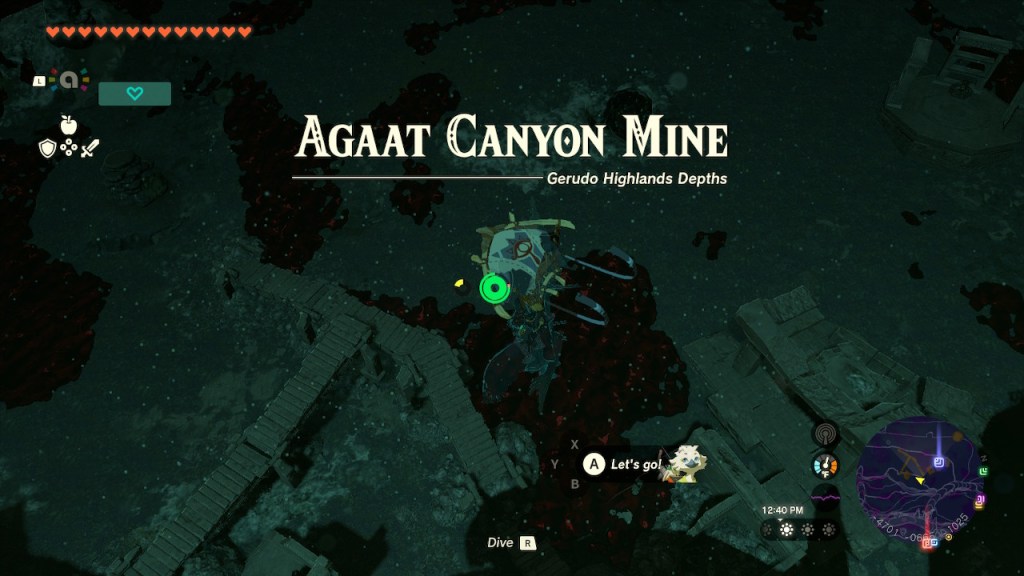
The discovery of the incredible Agaat Canyon Mine.
Apologies if you were expecting something a little bit more climactic for this secret list item . This one has been relegated to an honourable mention because it’s only partially been fixed, and it’s a largely irrelevant point in the grand scheme of the game that many players probably don’t care about. Like I said at the beginning of the article: there’s a chance you may not have noticed this at all.
If you’re not obsessed with the geography and layout of Hyrule like I am, you might not be entirely aware of what I’m talking about, so I’ll briefly explain the paradox of Mount Agaat: it’s a large flat mountain on the furthest west reaches of the Gerudo Highlands. It’s named, but no matter what you do in either game, you can only reach the ridge at its foot. If you try to climb any higher, you’ll be met with that infamous ‘you can’t go any further,’ which is far more frustrating than usual when you can see there’s clearly something past the invisible barrier.
If you think I might be making a little bit too much of this (and maybe I am), you can look up ‘Mount Agaat’ and find a host of other people wondering and complaining about it—so no, I’m not making this up.
To make a long ramble shorter, I was desperately hoping that Mount Agaat would be a reachable area in Tears. And it kind of is—more accessible than in Breath, at any rate. You can now see the top of Mount Agaat from the North Gerudo Sky Archipelago, even if you can’t actually glide there. There’s also the newfound existence of the Agaat Canyon Mine, a place in the Depths that is absolutely rich in Zonaite and is located—you guessed it!—directly underneath Mount Agaat. This means that you can now have a Hero’s Path that looks like you’ve been on top of the infamous mountain, which brings me unreasonable amounts of glee.
There’s also a Frost Talus under there, which makes me upset that the Depths minibosses don’t have a little place-name title above their health bar. If I could fight a boss that said ‘Agaat Canyon’ on its health bar I would probably lose it in the best possible way and you, dear reader, would hear my ecstatic squeals regardless of where you live.
Do you miss things from Breath of the Wild? What do you think Tears of the Kingdom did better? Let me know what you think, whether you agree with my points listed, or something else came to mind first.
 The Nerdy Smial
Leave a comment